
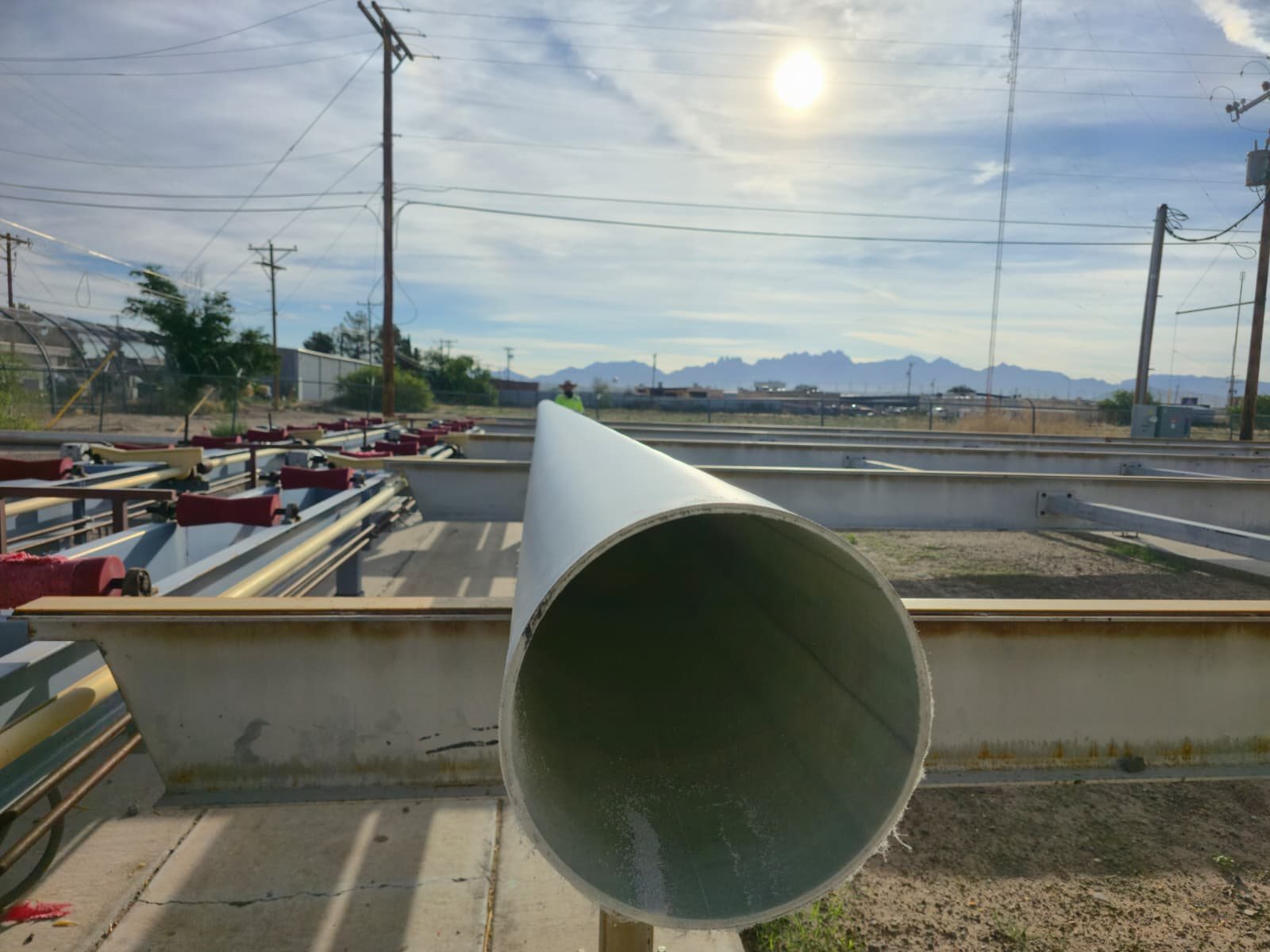
Pipeline, rebuilt for distance.
A continuous composite pipeline system that carries water, gas, oil and slurry farther, lighter, and with a fraction of the carbon of steel or HDPE.
See the technologyProven technology.
New momentum.
Long Pipes International is the company behind The Fluid Highway® — a continuous composite pipeline engineered to move liquids and gases more efficiently, safely and affordably across long distances.
At the end of 2025 the business was acquired by its long-term investor: recapitalised, refocused, and placed under new management with a single mandate — to commercialise The Fluid Highway® at scale.
We work alongside project owners, engineers and regulators to design pipeline systems with fewer joints, simpler logistics and lower lifecycle cost. The principle is simple: infrastructure should be faster to deploy, easier to maintain, and more resilient for the people and industries it serves.
Three layers.
One seamless pipe.
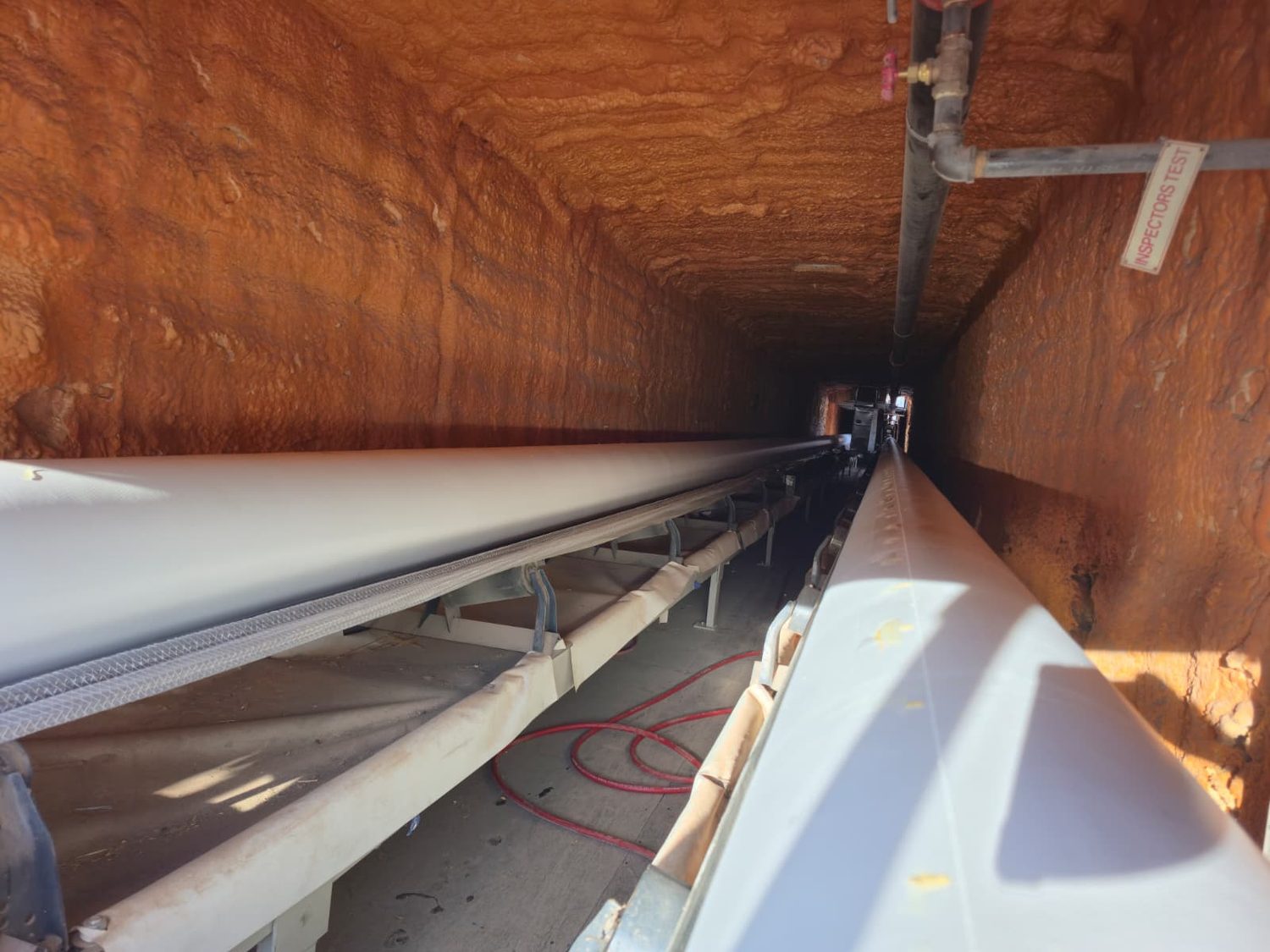
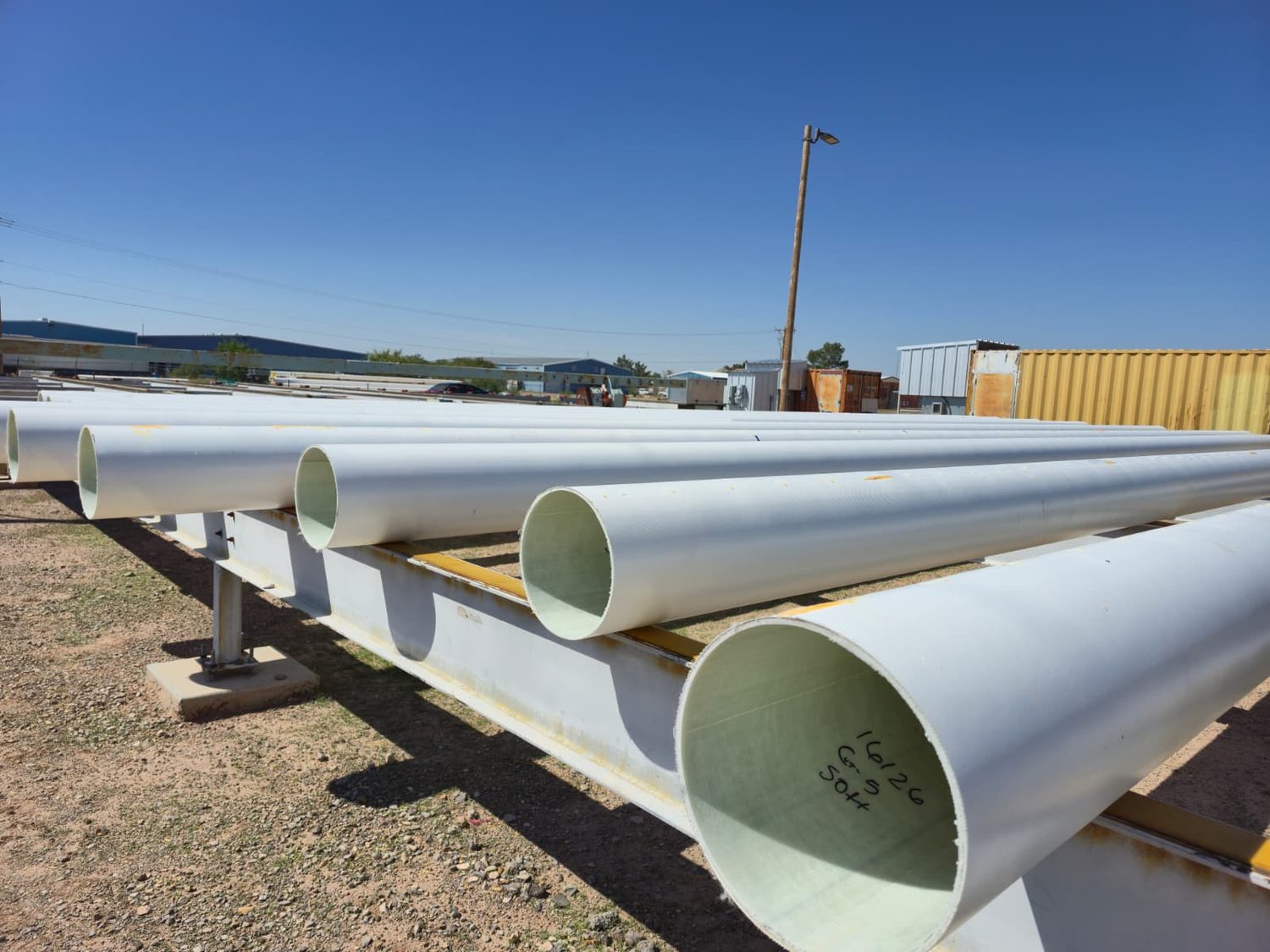
Not a coating on steel — a purpose-built composite. A seamless thermoplastic liner, structural glass reinforcement, and a weatherproof outer casing, built up continuously into a pipe that resists corrosion from the inside out.
-
01
0.50 mm · seamless
Thermoplastic inner liner
A seamless, continuous polyurethane or nylon liner — fused from multiple layers, not sprayed. Isolates the contents and resists saline water, hot brine, hydrogen sulphide and aggressive chemicals.
-
02
4–5 layers · >30 bar
Glass reinforcement
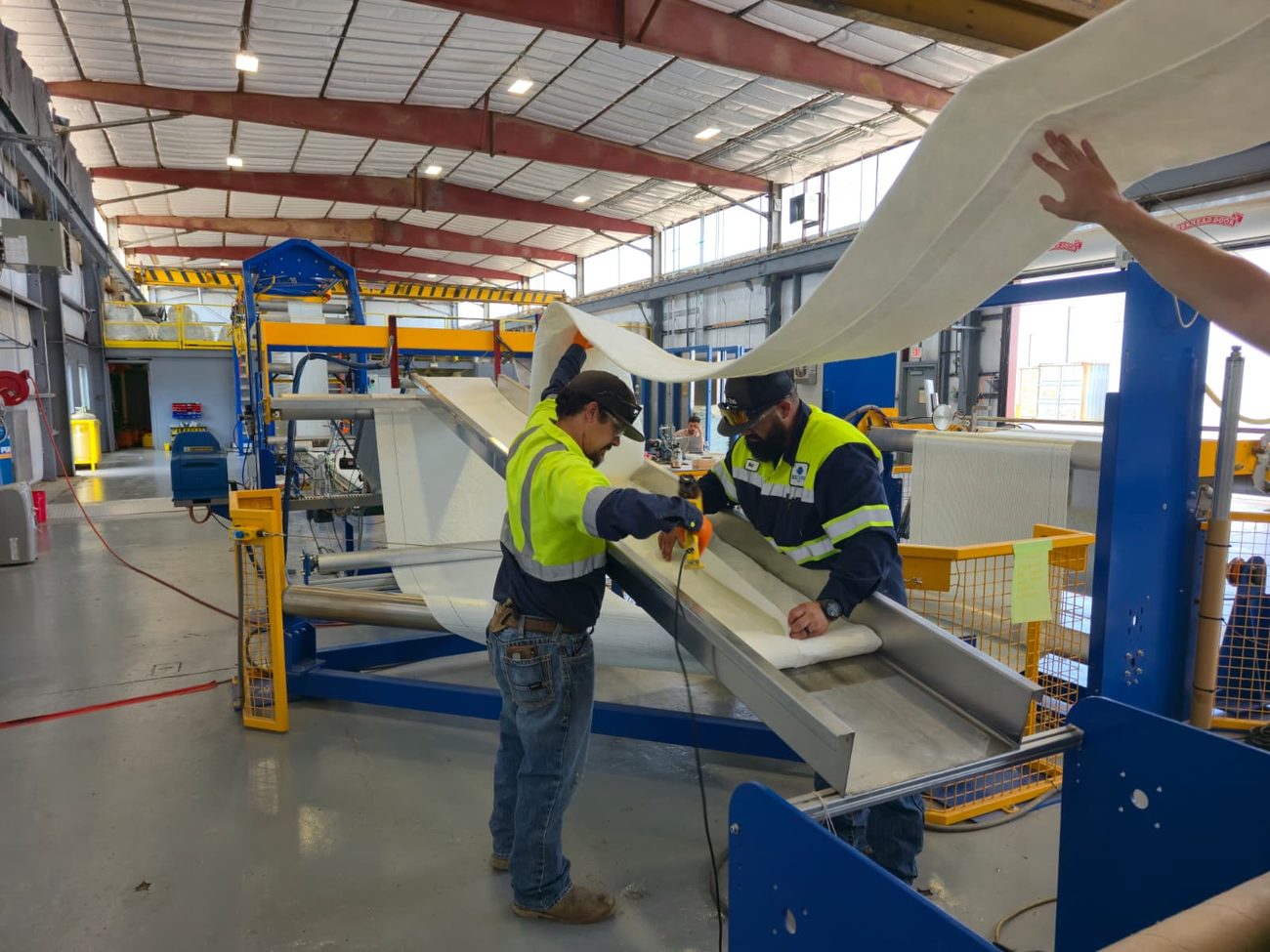
Resin-impregnated fibreglass engineered for strength in both the axial and circumferential directions. Layers are added to match the design pressure — typically four to five for service up to 25 bar.
-
03
UV · self-extinguishing
Protective outer casing
A premium spread-coated PVC skin with UV stabilisers and fire-retardant inhibitors. Self-extinguishing, and field-proven through more than ten years of direct sun exposure without degradation.
Engineered advantages
Up to 75% lighter
Around a quarter of the mass of comparable steel or HDPE — minimal heavy lifting gear on site.
Corrosion-proof bore
The plastic liner means no internal corrosion, no cathodic protection and no voltage mitigation.
Fewer joints
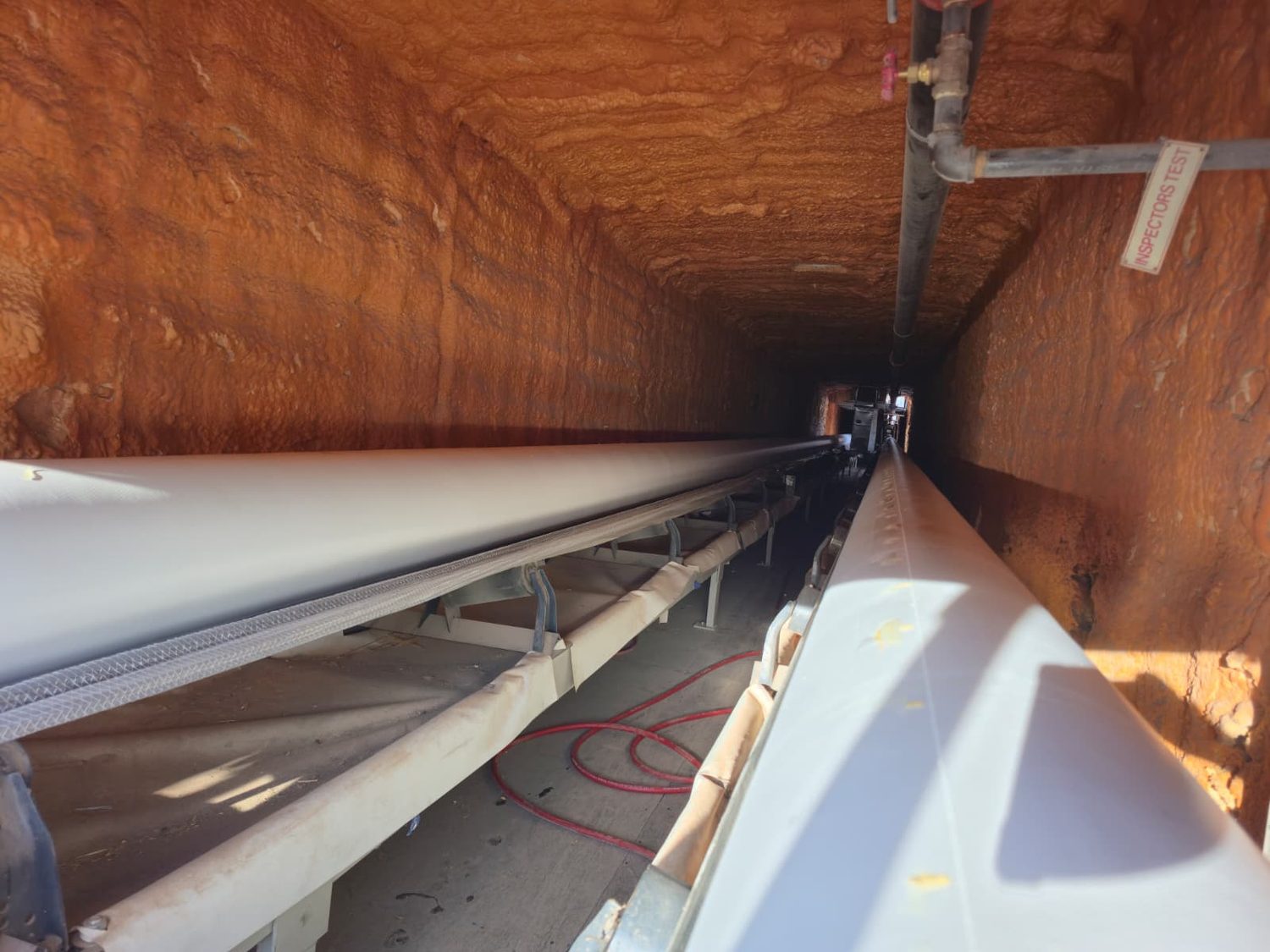
Made in long single lengths — up to 2 km in the field — cutting joints, leak paths and install time.
Temperature tolerant
Handles extremes and rapid swings with no brittle fracture and no derating for temperature or hydrocarbons.
Simpler logistics
Far more pipe per truck. For 600 km, the raw-material containers replace thousands of pipe loads.
Leak-resistant
The impermeable liner restricts gas permeation — important for methane, CO₂ and future hydrogen.
Above-ground ready
Suitable for above-ground runs, with thermal expansion behaviour similar to steel.
Cost effective
Speed and simplicity in production plus transport savings add up to competitive delivered cost.
Built for the hardest fluids to move
Suited to most pipeline segments — with the strongest fit where corrosion, distance and weight make conventional pipe expensive to lay and maintain.
Produced water
The high-volume wastewater of shale oil and gas — often several times the oil produced by volume.
Priority segmentOil & gas
Low-pressure gas and oil lines, including coal-seam and shale gas across North America and Australia.
Priority segmentSlurry
A premium option for abrasive slurry transport, with real construction savings over the run.
Strong fitSaline & hot brine
The polyurethane liner shrugs off saline water and hot brine that corrode metal pipe.
Strong fitProcess & produced
Industrial process and produced-water transport, including the West Texas basins.
Priority segmentWastewater
The liner resists attack from wastewater, making long transport runs a natural fit.
Strong fitPotable & irrigation
Long overland potable and irrigation mains where low weight and few joints win.
SelectiveHydrogen
An impermeable liner positions The Fluid Highway® as a candidate pipe for hydrogen transport.
In developmentCO₂ & carbon
Restricted permeation and corrosion resistance suit wet CO₂ and carbon-transport duty.
In developmentA lighter line, a lighter footprint
In a University of Sydney assessment of a 600 km pipeline, The Fluid Highway® carried a fraction of the carbon of steel and HDPE — driven largely by the trucks it takes off the road.
Source: “Environmental Assessment of Different Long-Distance Water Transportation Schemes,” University of Sydney, commissioned by Long Pipes. Captures raw materials, manufacture, delivery, construction and operation.
Made in New Mexico.
Built for the field.
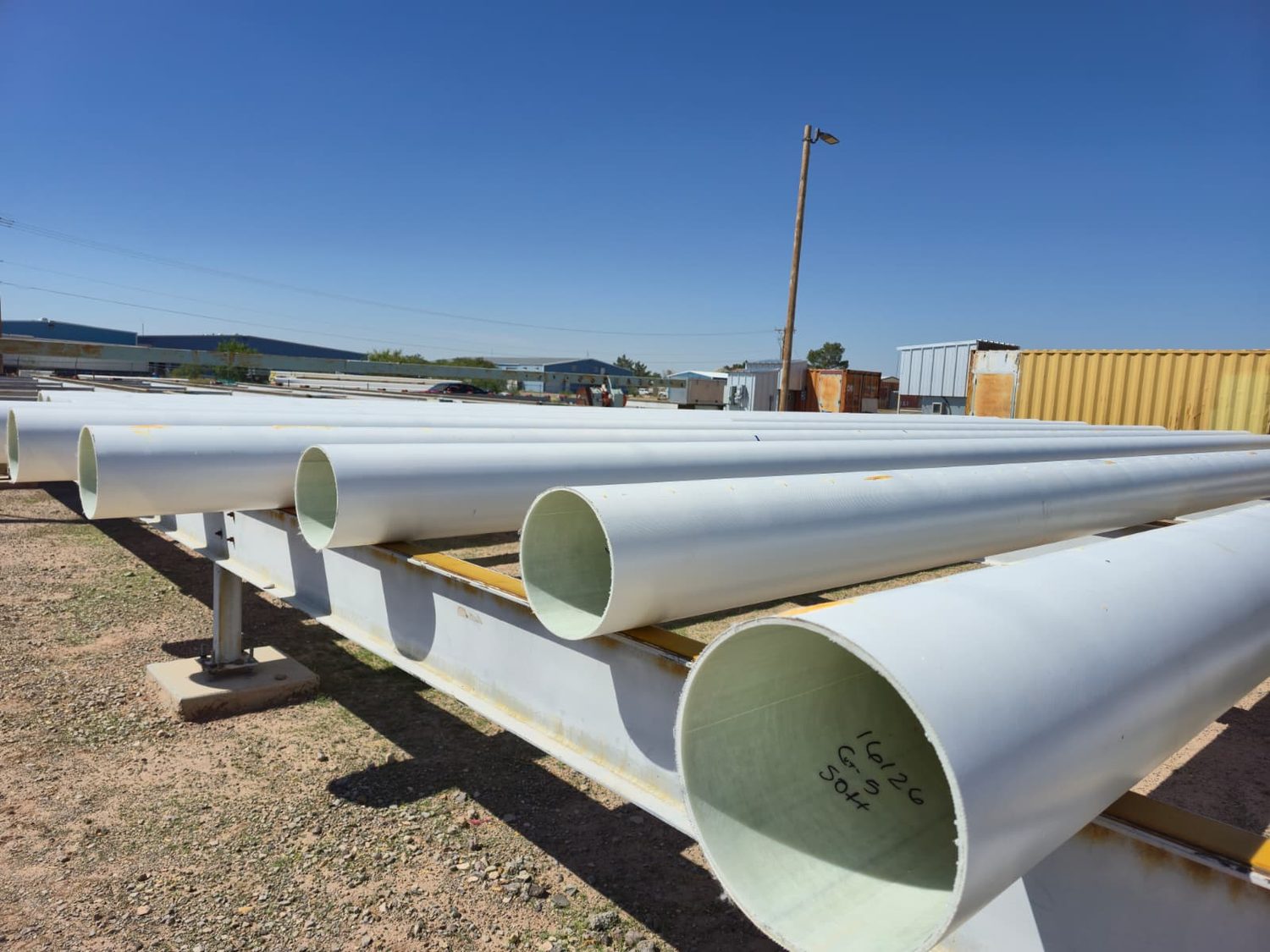
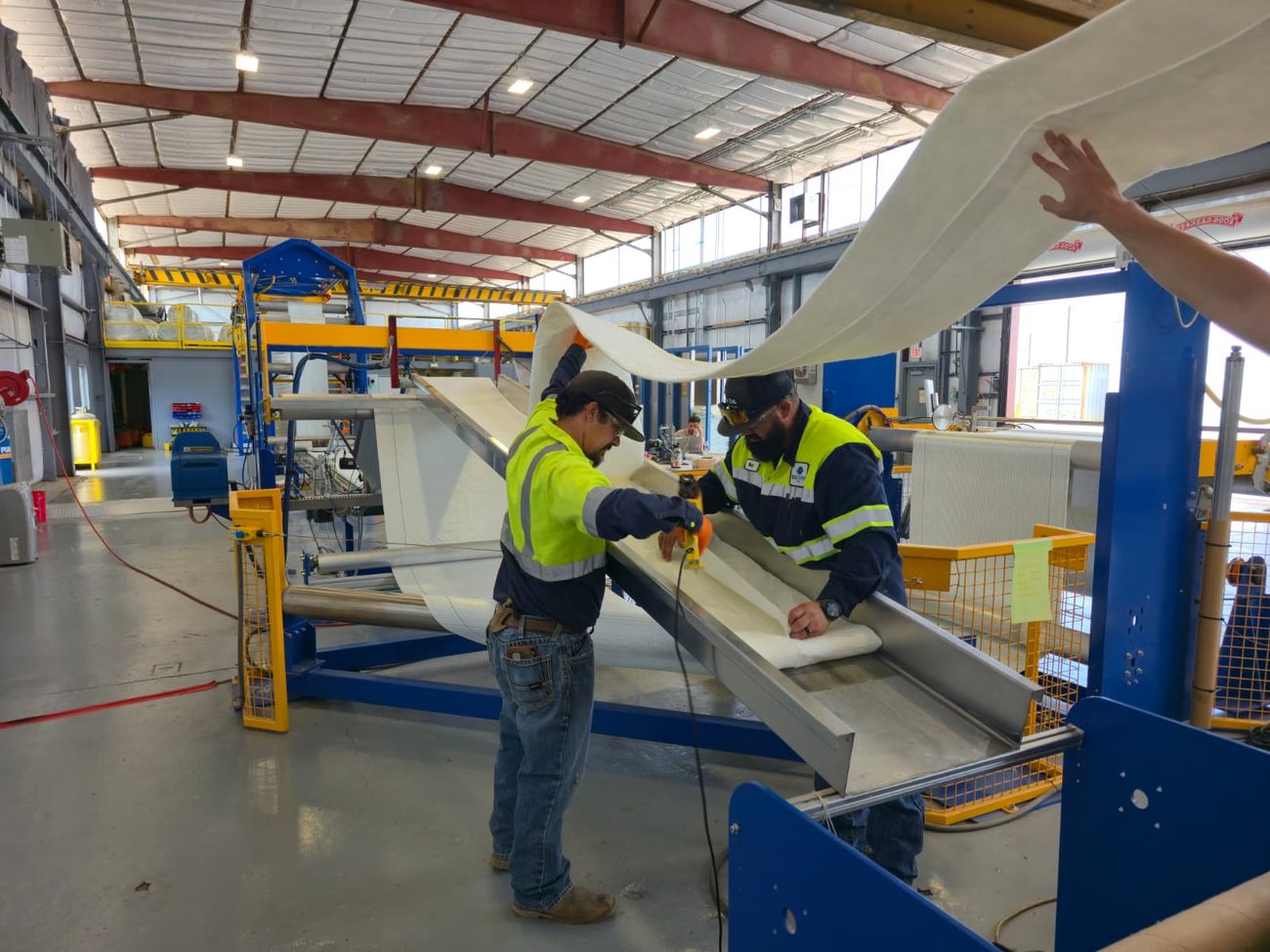
Our US joint venture in Las Cruces produces pipe in 50 ft factory lengths — and the same process can run continuously on the construction site in single lengths up to two kilometres.
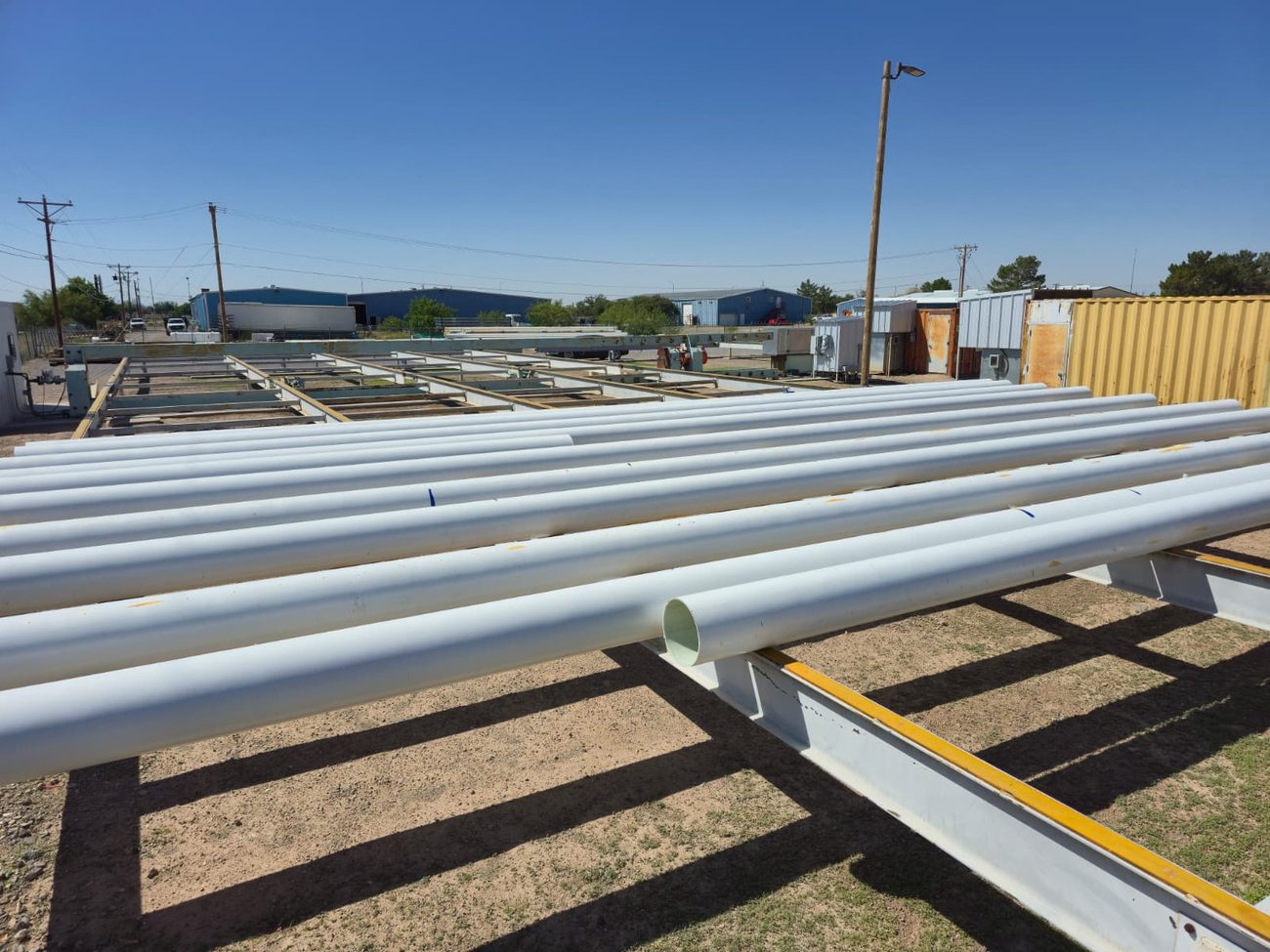
Specifications
| Diameter range | 300–500 mm outside diameter today, with a development roadmap toward 1000 mm. |
|---|---|
| Length | Up to 2 km continuous when manufactured in the field; up to 20 m / 50 ft in standard factory lengths. |
| Mass | ≈ 11 kg/m for a nominal 300 mm pipe — roughly one quarter of comparable steel and polyethylene. |
| Max. operating pressure | 325 mm OD with four glass layers tests above 30 bar; target segments generally run ≤ 25 bar. |
| Inner liner | Seamless thermoplastic polyurethane or nylon, 0.50 mm, fused continuous — not sprayed. |
| Reinforcement | Resin-impregnated fibreglass, layered to the design pressure (typically 4–5 layers). |
| Outer casing | Spread-coated PVC with UV stabilisers and fire-retardant inhibitors; self-extinguishing. |
| Jointing | Shouldered adhesive couplings as standard; factory flanges available; rubber-ring collars in development. |
| Suitable media | Potable & saline water, wastewater, produced & process water, slurry, low-pressure gas & oil. |
Let’s talk about your pipeline
Whether you’re moving produced water across a basin or scoping a long overland main, our team can help you assess fit, pressure class and delivery.
Singapore — HQ
Long Pipes International Pte Ltd
1 Coleman Street, #10-01
The Adelphi, Singapore 179803
United States
Long Pipes USA
Las Cruces, New Mexico
United States of America
info@longpipes.com
Singapore & USA
Phone
+65 6339 8322
Singapore & USA